



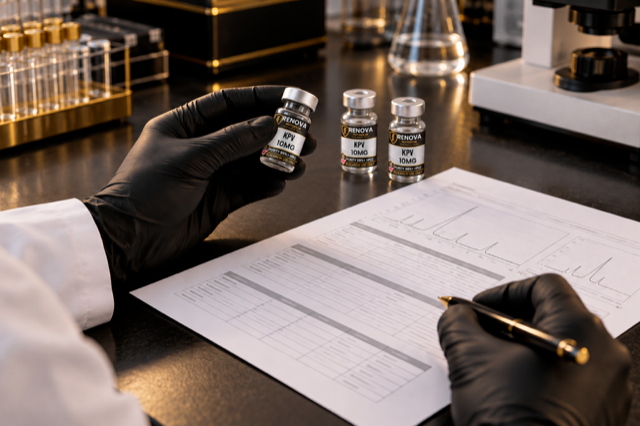
Quick answer: A Certificate of Analysis (COA) is a batch-specific document that reports the analytical test results for a research compound. To read one properly, check the batch number, the purity percentage, the testing methods used (usually HPLC and mass spectrometry), the test date and the laboratory that carried out the analysis.
What is a Certificate of Analysis?
A Certificate of Analysis is a formal document confirming that a specific batch of a compound has been tested against defined specifications. It links a physical product to its analytical data, which allows researchers to verify quality before using the material in controlled laboratory work.
What should a COA include?
A reliable COA should contain the following:
- Product name and identifier, so the document matches the compound you hold
- Batch or lot number, which should match the label on your vial
- Purity percentage, usually determined by HPLC
- Identity confirmation, usually by mass spectrometry
- Testing date, showing the data is recent and relevant
- Testing laboratory details, ideally an independent facility
- Appearance and physical specifications, such as form and colour
How do you read the purity result?
Purity is normally reported as a percentage of the main compound relative to all detected components. A chromatogram (a graph of detected peaks) often accompanies it. One dominant, sharp peak with minimal smaller peaks indicates a cleaner sample. Multiple significant peaks suggest impurities.
What does the mass spectrometry result show?
Mass spectrometry measures the molecular weight of the compound. The observed value should closely match the expected theoretical value. This confirms identity, which purity data alone cannot do.
What are the red flags on a COA?
- No batch number, or one that doesn’t match your product
- No named laboratory or testing method
- Purity stated with no supporting chromatogram
- Missing or undated results
- Identical data reused across different batches
- Edited, low-resolution or inconsistent formatting
Why does COA review matter for research?
Reproducible research depends on knowing exactly what is in your materials. Reviewing the COA before use helps researchers document their materials accurately and reduces the risk of inconsistent results caused by unverified inputs. For more on this topic, see our guides to batch transparency and COA documentation and independent laboratory testing.
FAQs
What is a COA in laboratory research?
A COA is a batch-specific report of analytical test results confirming a compound’s purity, identity and quality.
Is a high purity percentage enough?
No. Purity should be supported by chromatogram data and identity confirmation, and it should be tied to a specific batch.
How can I check that a COA is genuine?
Match the batch number to your product, confirm the testing laboratory is named, and ask the supplier for the raw chromatogram if anything looks unclear.
All products are supplied strictly for laboratory research purposes only and are not intended for human or veterinary use.